

A beautiful wood salad bowl is more than just serveware—it becomes the centerpiece of the dining table. Whether you’re preparing a colorful garden salad, serving fresh fruit, or displaying seasonal decorations, the right bowl combines practicality with timeless style.
Among the many hardwoods available today, acacia wood has become one of the most popular materials for premium salad bowls. Loved by chefs, interior designers, and homeowners alike, acacia offers a unique balance of durability, elegance, and sustainability that few other woods can match.
If you’re planning to invest in a quality serving bowl, here’s why acacia wood deserves your attention.
Why Material Matters
Many people choose a salad bowl based only on appearance. However, the material directly affects:
- Longevity
- Food safety
- Maintenance
- Durability
- Overall dining experience
Plastic bowls may scratch and stain over time. Ceramic bowls can chip or crack. Glass bowls, while elegant, are often heavy and fragile.
A handcrafted wood salad bowl, especially one made from acacia, offers the perfect combination of beauty and performance.
What Makes Acacia Wood Special?
Acacia is a hardwood harvested from fast-growing trees found throughout Asia, Africa, and Australia. For centuries, craftsmen have appreciated its remarkable strength and naturally striking grain patterns.
Unlike softer woods, acacia develops rich variations in color, ranging from honey gold to deep chocolate brown. No two bowls ever look exactly alike.
This natural uniqueness transforms every bowl into a functional work of art.
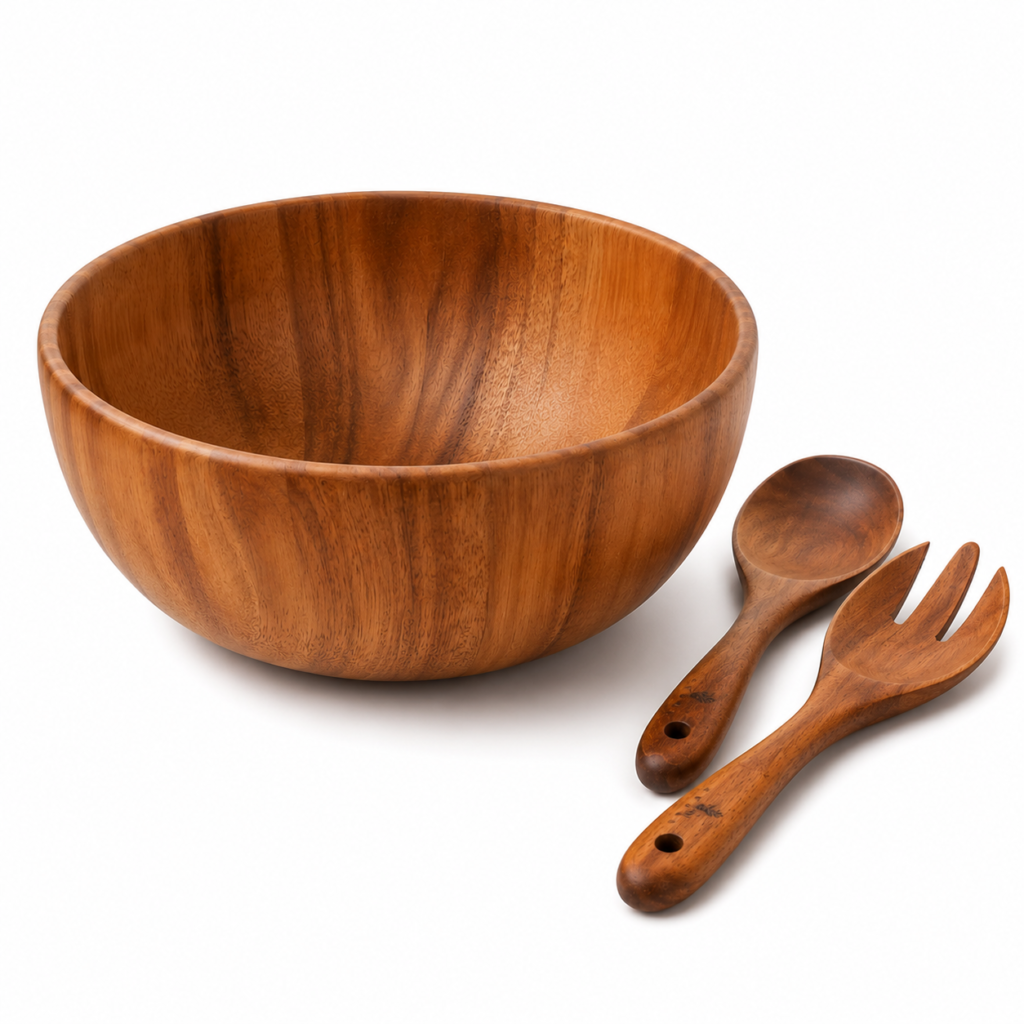
One of acacia’s greatest advantages is its density.
Acacia is significantly harder than many commonly used woods, making it resistant to:
- Scratches
- Dents
- Daily wear
- Moisture absorption
For families that enjoy cooking and entertaining, this durability makes an enormous difference.
Unlike bowls that quickly show signs of aging, a quality acacia wood salad bowl often becomes even more beautiful over time.
Exceptional Durability for Everyday Use
Naturally Water Resistant
Salads naturally contain moisture.
Lettuce, cucumbers, tomatoes, citrus fruits, and dressings all expose the bowl to water.
Fortunately, acacia contains natural oils that help resist moisture better than many hardwood species.
While no wooden bowl should ever be soaked in water or placed in the dishwasher, acacia tolerates regular use remarkably well when properly maintained.
A Stunning Natural Grain
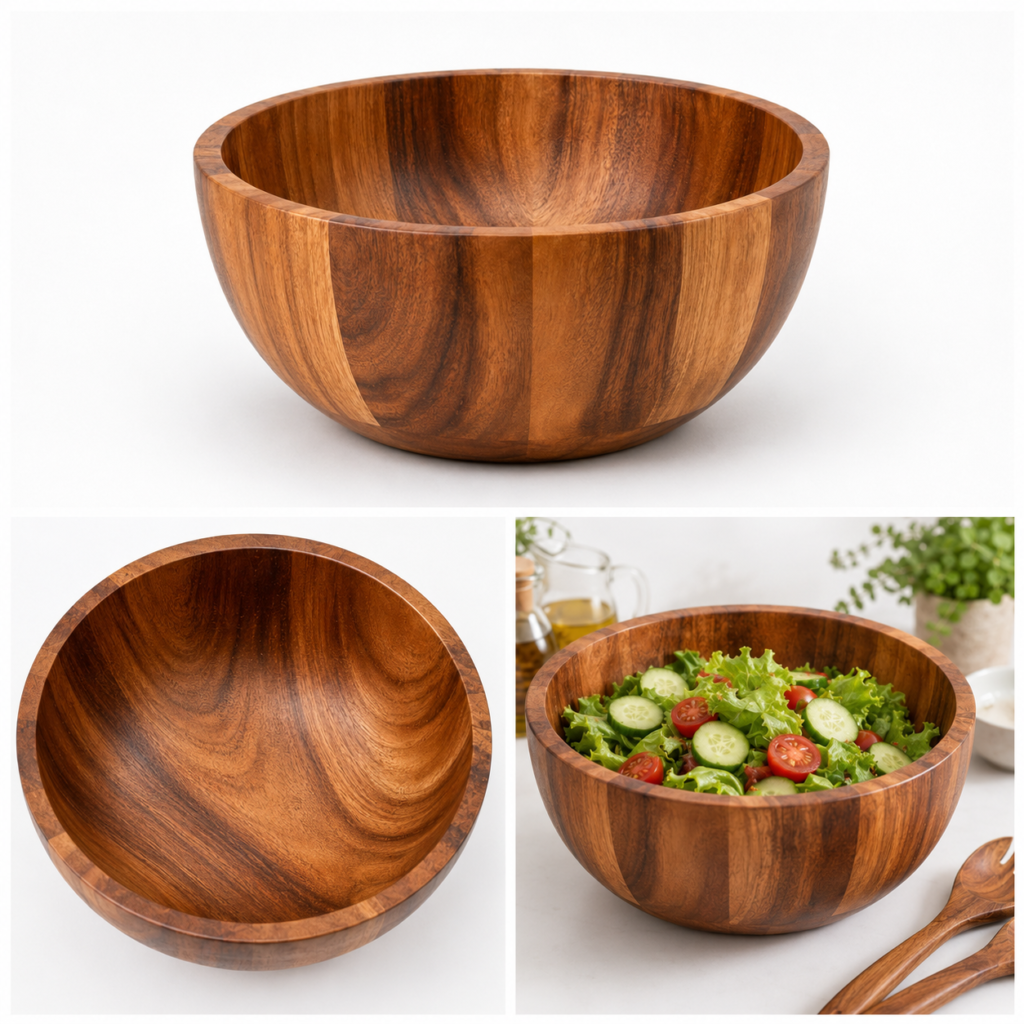
One reason designers love acacia is its dramatic appearance.
The wood features:
- Flowing grain lines
- Warm color transitions
- Organic patterns
- Rich natural contrast
Every bowl becomes unique.
Instead of looking mass-produced, an acacia bowl feels handcrafted and authentic.
It easily complements nearly every decorating style, including:
- Modern kitchens
- Farmhouse interiors
- Scandinavian homes
- Coastal décor
- Rustic dining rooms
- Minimalist spaces
Safe for Food
Food safety is one of the biggest concerns when choosing serving pieces.
Acacia wood is naturally suitable for food contact when finished with food-safe oils or waxes.
Unlike plastic, quality hardwood bowls do not contain BPA or synthetic chemicals.
Many premium manufacturers finish their bowls using:
- Food-safe mineral oil
- Natural beeswax
- Plant-based finishing oils
These finishes protect the wood while preserving its natural appearance.
Perfect for More Than Salads
Although called a wood salad bowl, its uses extend far beyond leafy greens.
Many homeowners use their bowls for:
- Fresh fruit
- Bread
- Pasta
- Popcorn
- Snacks
- Decorative centerpieces
- Seasonal décor
- Dining table displays
Its versatility makes it one of the most practical accessories in the kitchen.
Designed to Impress Guests
Presentation matters.
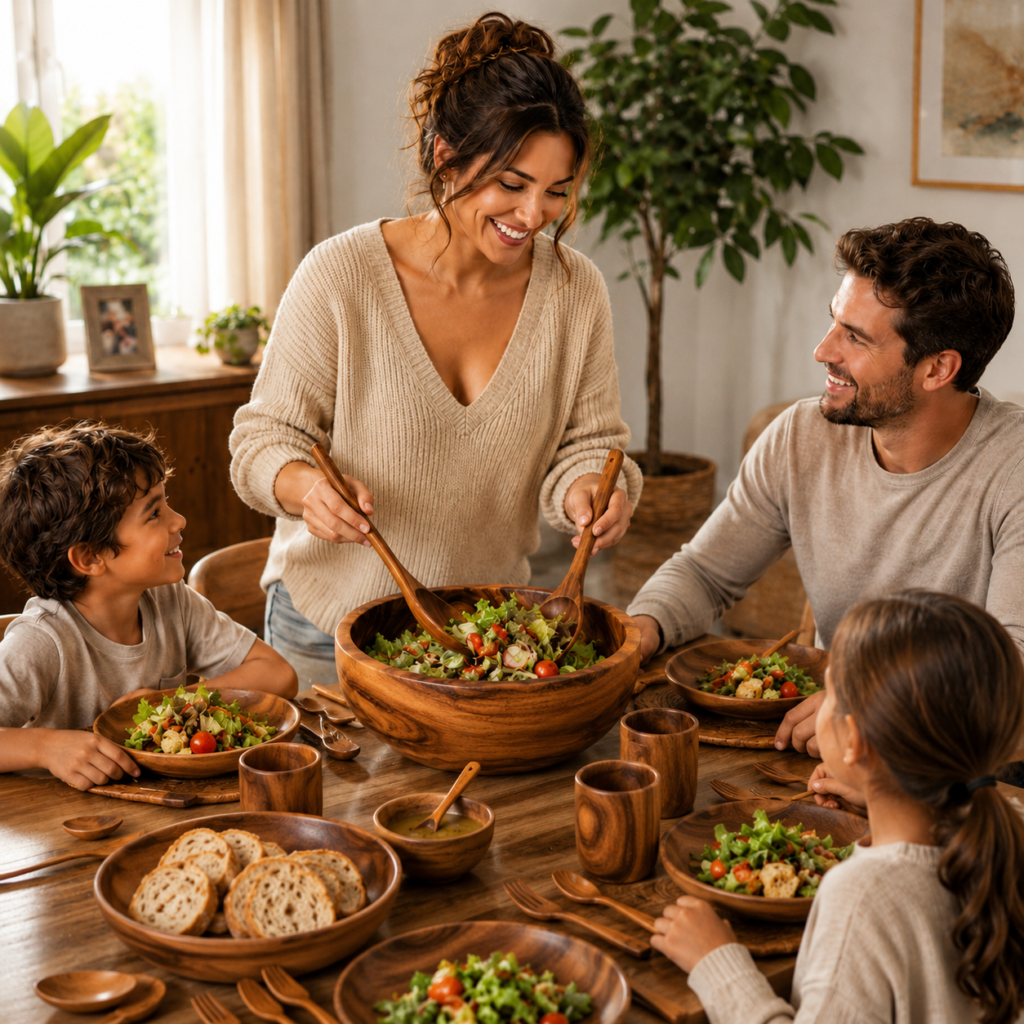
A colorful salad served in a handcrafted acacia bowl instantly elevates the dining experience.
Whether hosting:
- Thanksgiving dinner
- Summer barbecue
- Family gathering
- Holiday celebration
- Casual lunch
the bowl naturally becomes the centerpiece of the table.
Its warm wood tones create a welcoming atmosphere that ceramic and plastic simply cannot replicate.
Sustainable and Eco-Friendly
Many homeowners today want products that are environmentally responsible.
Acacia is considered one of the more sustainable hardwood choices because:
- Trees grow relatively quickly
- Responsible forestry practices are widely used
- Many products utilize plantation-grown wood
- Long-lasting products reduce waste
Choosing durable serveware also means replacing items less frequently, which contributes to a more sustainable lifestyle.
Easy to Maintain
One misconception about wooden bowls is that they require complicated care.
In reality, maintenance is simple.
Daily Care
- Wash gently by hand.
- Use warm water and mild soap.
- Dry immediately with a soft towel.
Monthly Care
Apply a food-safe mineral oil or beeswax conditioner to keep the wood hydrated and maintain its rich color.
Avoid:
- Dishwashers
- Microwave use
- Long soaking periods
- Harsh detergents
With minimal care, an acacia bowl can remain beautiful for many years.
Why Interior Designers Love Acacia
Interior designers often choose natural materials because they add warmth and texture to a space.
An acacia wood salad bowl works beautifully as:
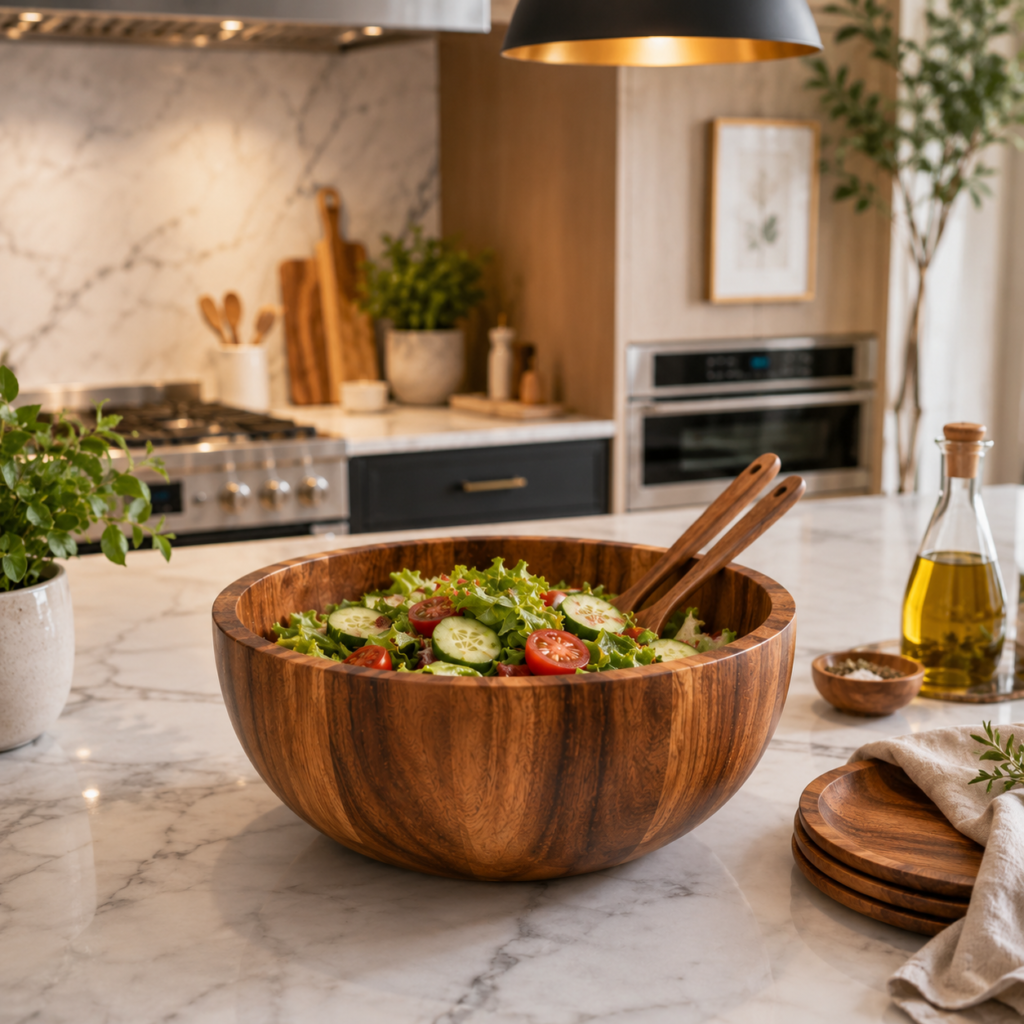
- A kitchen island centerpiece
- Dining table decoration
- Coffee table accent
- Open shelving display
For more inspiration on creating stylish kitchens and dining spaces, explore Home & Design’s Kitchen & Bath section:
https://www.homeanddesign.com/category/kitchen-bath/
Natural wood pairs effortlessly with:
- Marble countertops
- Quartz surfaces
- White cabinetry
- Black fixtures
- Neutral linens
- Stone accessorie
Handmade Beauty
Unlike factory-produced plastic bowls, handcrafted acacia bowls celebrate natural imperfections.
Small variations in:
- Grain
- Color
- Texture
- Shape
are signs of authenticity rather than flaws.
Each bowl tells its own story.
That individuality is one reason handmade wooden kitchenware remains so highly valued.

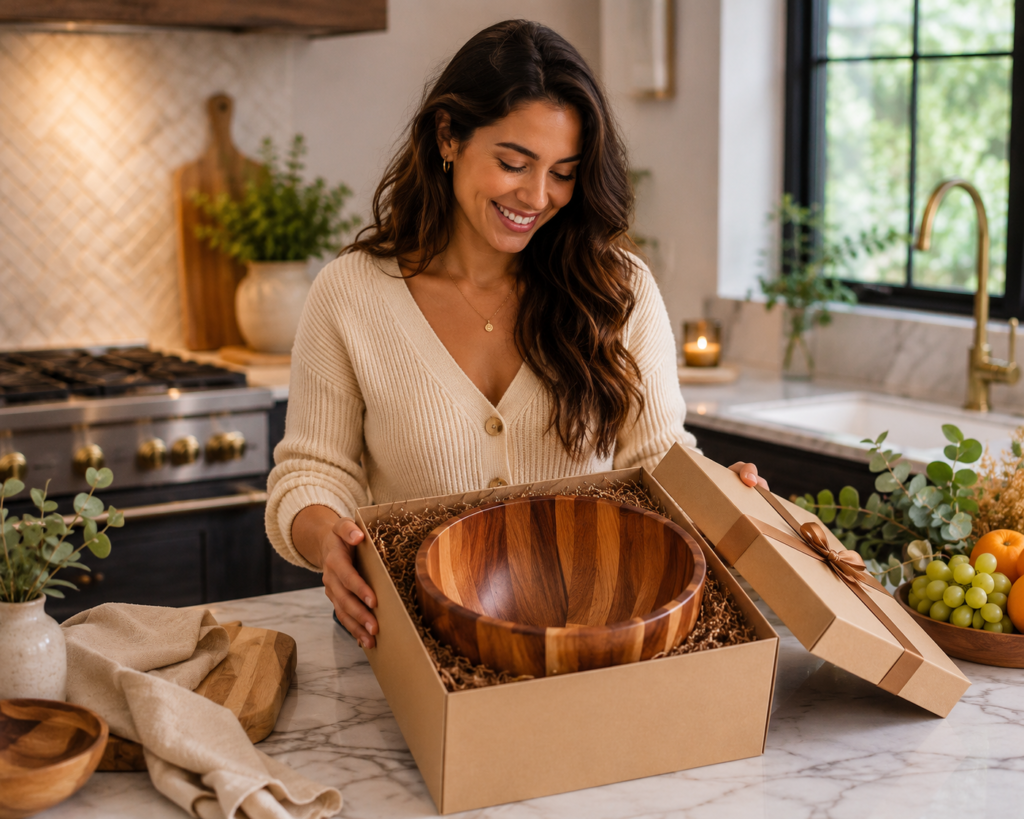
A Thoughtful Gift
A premium wood salad bowl also makes an excellent gift for:
- Weddings
- Housewarmings
- Anniversaries
- Mother’s Day
- Christmas
- Newlyweds
Its combination of practicality and elegance ensures it will be appreciated for years to come.
Choosing the Right Size
When selecting a salad bowl, consider how you plan to use it.
Small (8–10 inches)
Perfect for individual servings, snacks, or fruit.
Medium (10–12 inches)
Ideal for couples or small families.
Large (12–14 inches)
Great for entertaining and family dinners.
Extra Large (14–16+ inches)
Perfect for parties, buffets, and serving large groups.
Final Thoughts
A quality wood salad bowl is more than a serving dish—it’s a timeless kitchen essential that combines functionality, craftsmanship, and natural beauty.
Acacia wood stands out because it offers exceptional durability, rich grain patterns, moisture resistance, and sustainable appeal. Whether you’re preparing everyday meals or entertaining guests, an acacia bowl brings warmth and elegance to any table.
If you’re looking for serveware that will remain beautiful for years while complementing a wide range of interior styles, acacia wood is one of the finest choices available.

